01 / OPERATING PRINCIPLE
Evidence-Informed
Grounded in peer-reviewed research, not "biohacking" speculation. Every principle in neuronutrition practice traces back to the science.
Discover Neuronutrition
An emerging field bridging neuroscience, nutrition, and psychology, neuronutrition provides the advanced framework to support your clients' brain and mental health where conventional training stops.

What is neuronutrition?
As a formal discipline, neuronutrition explores the bi-directional relationships between how our nervous system influences the way we eat, and how the way we eat influences our nervous system.
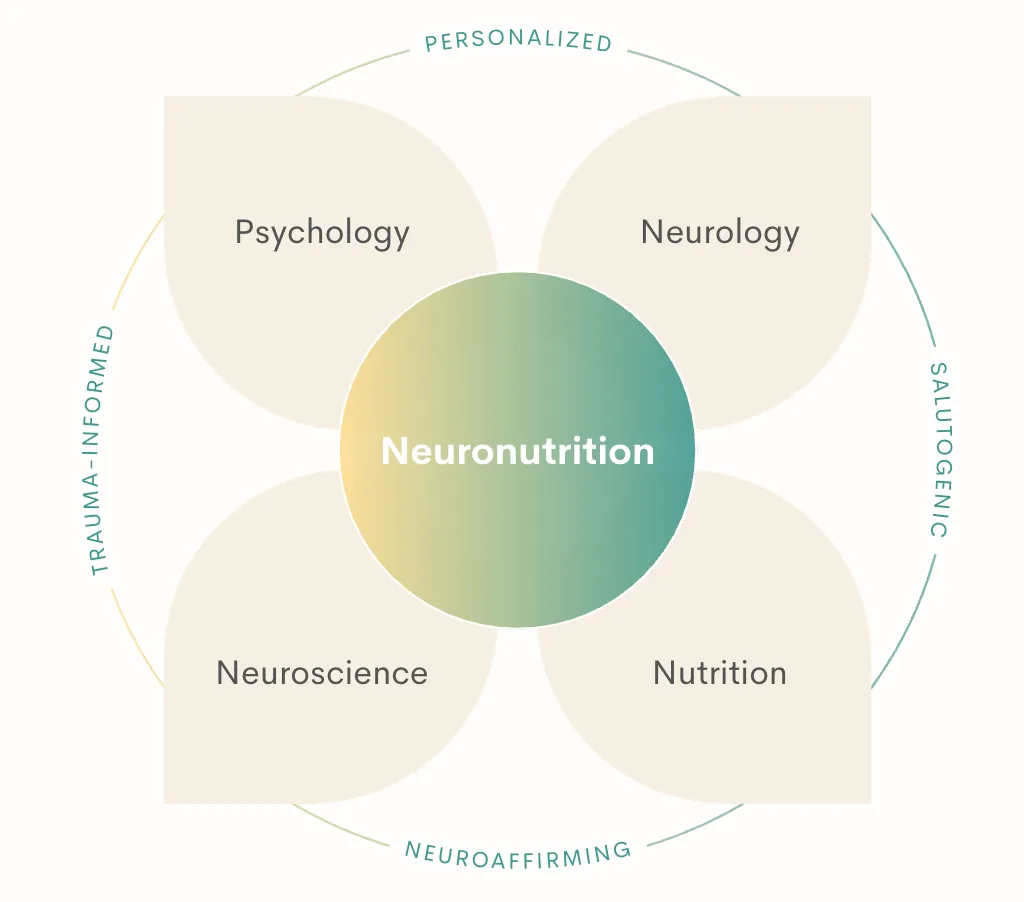
It functions as an interdisciplinary field integrating theories, practices, and research from neuroscience, nutrition science, psychology, and neurology.
By operating at this intersection, the field examines how nutrients, dietary supplements, dietary patterns, and the sociocultural environment influence the neurobiological and neurochemical processes involved in cognition, behavior, and neurological and mental health.
The practice gap
Most practitioners leave their foundational training without the tools to address the profound connection between neuroscience, nutrition and psychology. This gap isn't due to a lack of evidence — it's a lack of clinical application. Many practitioners find themselves working with clients who have "tried everything" but remain stuck because the biological foundation for change hasn't been supported.
The modern clinical landscape presents a compounding crisis that conventional training models are no longer equipped to handle:
of the U.S. population currently lives with a neurological disease or disorder — the leading cause of ill health and disability worldwide.
of daily calories consumed by U.S. adults come from ultra-processed foods, linked to increased risk of anxiety, depression, and cognitive decline.
of U.S. adults report feeling actively burned out, directly hindering clinical outcomes across the care continuum.
of psychologists and 63% of psychiatrists report no formal nutrition training, while 59% recommend supplements despite poor functional literacy in nutritional medicine.
I'd been practicing nutrition for over a decade and still felt like I was missing a fundamental piece of the picture. Neuronutrition gave me that piece — and then some. It didn't just change my practice. It changed how I think.
Priya Nair, RD, NANCPIntegrative Dietitian
The framework
Neuronutrition sits at the convergence of five disciplines: neuroscience, neurobiology, nutrition, neurology, and psychology. It's unified by a set of operating principles that distinguish it from conventional nutrition or wellness trends.
Grounded in peer-reviewed research, not "biohacking" speculation. Every principle in neuronutrition practice traces back to the science.
Understanding how trauma physically changes the brain and nervous system — and how targeted nutrition supports regulation and recovery.
Focused on building resilience and honoring the unique biology of neurodivergent populations — not correcting "deficits."
Treating the gut-brain-hormone axis as a single, inseparable system — because the body doesn't work in silos, and neither should your practice.
A clearer distinction
As the field grows, so does the noise around it. Here's what distinguishes rigorous neuronutrition practice from trends that use the same language.
Neuronutrition is: Evidence-informed, drawing from peer-reviewed neuroscience and nutrition science
Neuronutrition is not: A collection of wellness trends, biohacking protocols, or supplement stacks
Neuronutrition is: A lexicon to explain the brain-body connection clearly to clients and colleagues
Neuronutrition is not: Generic "food and mood" advice that ignores clinical complexity
Neuronutrition is: Focused on the "how" and "why" behind physiological change — not just what to eat
Neuronutrition is not: A single dietary philosophy, food rules, or "clean eating" ideology
Neuronutrition is: Trauma-informed and neuroaffirming — centered on the whole person and their lived experience
Neuronutrition is not: A replacement for psychiatric, psychological, or medical treatment
Neuronutrition is: Applicable across disciplines — dietetics, counseling, coaching, nursing, and more
Neuronutrition is not: Exclusive to any one profession or credential
Why we built this
The National Academy of Neuronutrition was founded by practitioners who felt like "islands" in their fields. We experienced the frustration of witnessing chronic suffering without having the power to provide a root-cause solution. So we built NANCP to meet the standards this field requires and to move practices forward.
Explore the CertificationBuilt on peer-reviewed research across five foundational disciplines — not trends or opinion.
The only credential that bridges the gap between nutrition and mental health into one usable clinical framework.
Designed specifically for the clinician or coach who is already in practice and needs advanced synthesis, not basics.
A genuine, substantive credential — not a weekend course. One that reflects the depth of what practitioners and clients actually need.


Neuronutrition helps us understand how our nervous system, brain, and behavior interact through food.
Timothy FrieFounder, National Center for Neuronutrition